
MARKETING
Dubai is raising the bar for healthcare marketing — and if you own a clinic, aesthetic centre, dental practice or healthcare business, this update deserves your attention.
The Dubai Health Authority (DHA) has issued Circular CIR-2026-00000144 — “Standards for Medical Advertisement Content on Social Media,” reinforcing the requirements for promoting healthcare services online.
For many smaller healthcare businesses, social media is one of their biggest sources of visibility, reputation and new clients. And these standards affect everything from the claims you make and titles you use to before-and-after photos, patient content and influencer collaborations.
I don’t see this as another obstacle to growth. I see it as the UAE raising the standard — and an opportunity for businesses to raise theirs too.
What Do Dubai Healthcare Businesses Need to Check?
1. Advertising Claims & Promotional Language
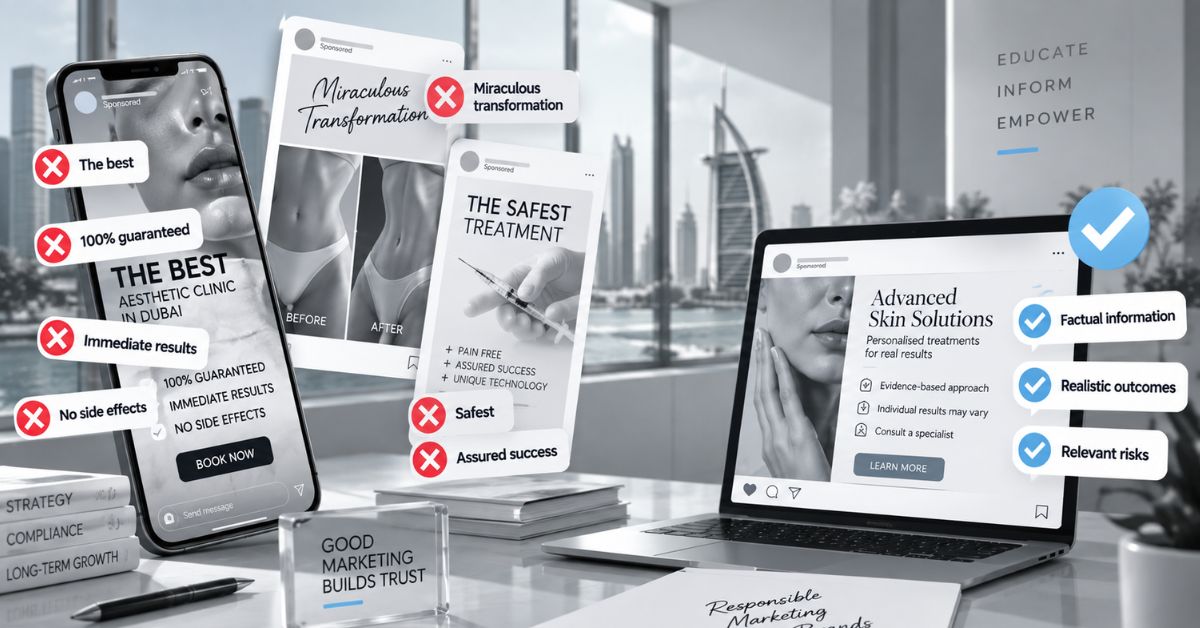
DHA restricts exaggerated or absolute claims that can mislead consumers.
❌ “The best”
❌ “100%” or “absolutely certain”
❌ “Miraculous” or “magic”
❌ “Safest”
❌ “Immediate results”
❌ “Assured success”
❌ “Has no side effects”
✓ Use factual, substantiated claims
✓ Communicate realistic outcomes
✓ Include relevant risks where required
My take? If removing “the best” or “100% guaranteed” makes your offer difficult to sell, you don’t have a compliance problem — you have a positioning problem. Talk about what genuinely differentiates your business instead.
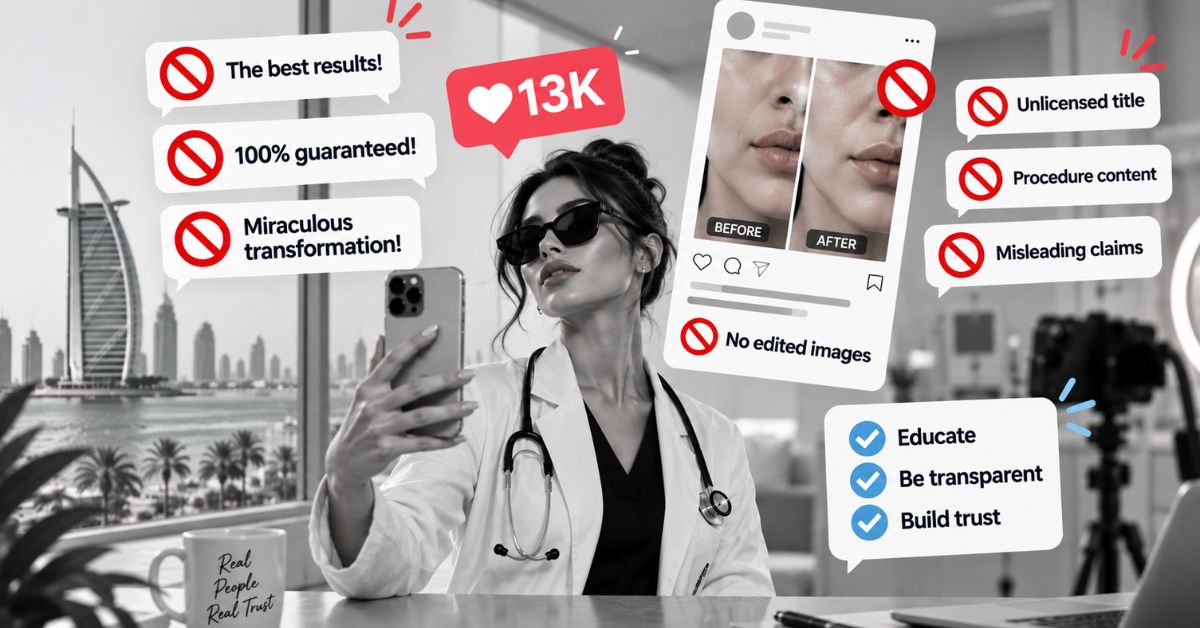
2. Professional Titles Must Match DHA Licensing
How your doctors and specialists are presented online matters.
❌ Don’t use professional or specialty titles that differ from the professional’s DHA licence.
❌ Don’t casually use titles such as Aesthetic Specialist, Cosmetic Specialist, Beauty Expert or similar designations where they don’t correspond with the licensed professional status.
✓ Review titles across your website, Instagram, Reels, ads and staff profiles.
✓ “Dr.” or “Doctor” should only be used in accordance with the applicable DHA requirements.
For business owners, this is worth checking now — particularly if your team profiles have been online for years.
3. Before-and-After Content
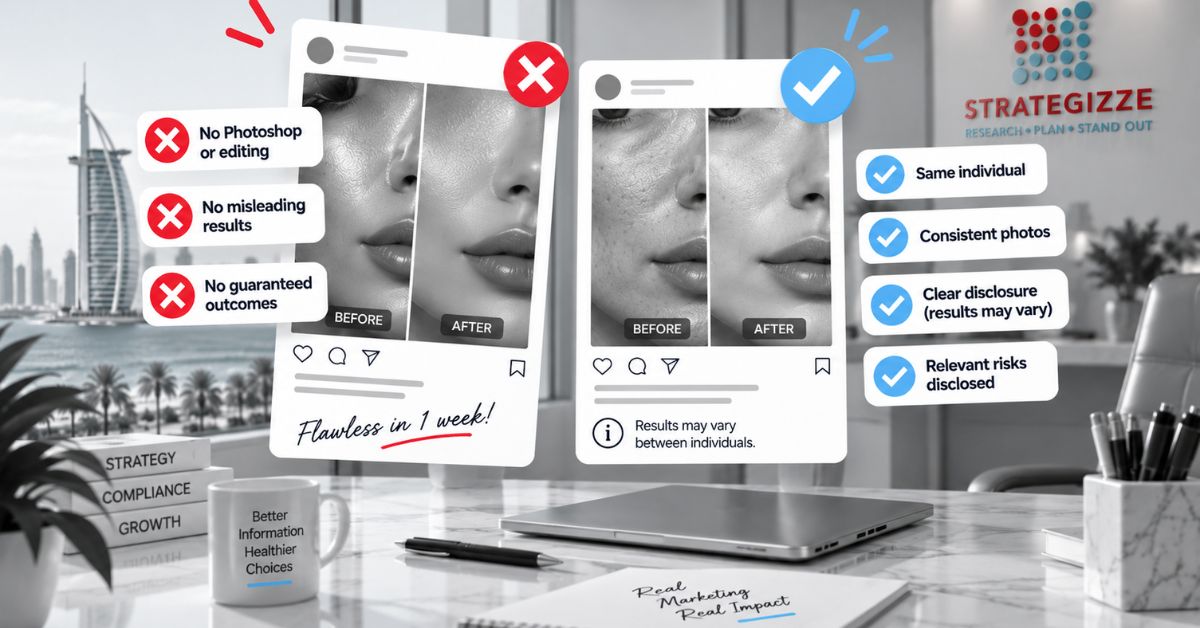
Before-and-after marketing is still possible, but it comes with strict requirements.
❌ No Photoshop or equivalent enhancement
❌ No misleading presentation of results
❌ No guaranteed-outcome messaging
✓ Same individual
✓ Consistent photographic requirements
✓ Clear disclosure that results can vary
✓ Relevant risks disclosed
Show reality, not advertising perfection. Realistic expectations may be less dramatic, but they build better customer relationships.
4. Patient Photos, Videos & Testimonials
Patient content can be powerful, but consent and confidentiality come first.
❌ Don’t rely on informal or verbal permission alone.
❌ Don’t compromise patient confidentiality.
✓ Obtain and document written consent.
✓ Follow additional consent requirements for minors.
✓ Build a proper internal process for approving patient content.
A simple rule for SMEs: “The patient said it’s fine” is not a consent system.
5. Influencer Marketing Is Covered Too
Working with creators doesn’t move healthcare marketing outside the compliance framework.
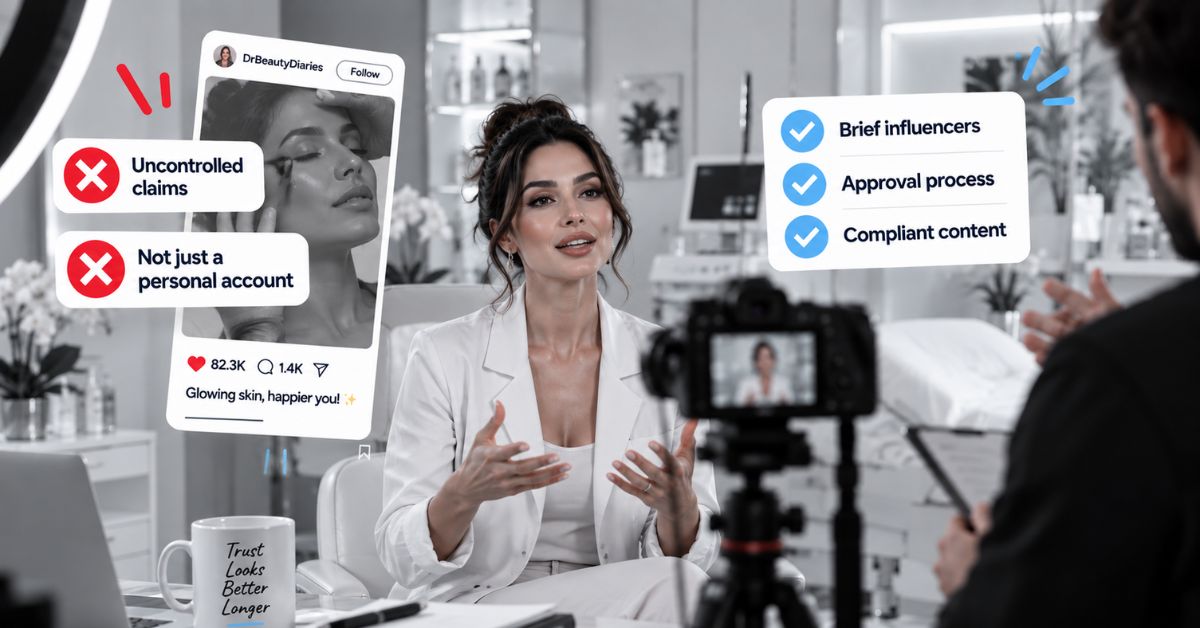
❌ Don’t give influencers complete freedom to make medical claims about your services.
❌ Don’t assume a personal account removes the facility’s responsibility for relevant content filmed on its premises.
✓ Brief influencers before filming.
✓ Establish an approval process where required.
✓ Make sure claims, titles and promotional messaging comply with DHA standards.
You don’t need to stop influencer marketing. You need to professionalise it.
6. Some Content Simply Shouldn’t Become Content
DHA also restricts certain promotional practices.
❌ Misleading or deceptive information
❌ Fear-based promotion
❌ Creating unnecessary demand for procedures
❌ Exploiting consumers’ lack of medical knowledge
❌ Certain promotional filming or live-streaming during procedures under general anaesthesia
✓ Educate instead of manipulating.
✓ Communicate benefits and risks responsibly.
✓ Build content around expertise, transparency and trust.
Not everything that gets views builds a brand.
What Should Business Owners Do Now?
You don’t need to panic or turn your Instagram captions into legal documents. You need to audit your marketing.
Check your social media, website and ads. Review your claims and professional titles. Make sure patient consent is properly documented. Audit before-and-after content and influencer collaborations. And make sure whoever manages your marketing actually understands the DHA requirements.
Most importantly, don’t just remove what you can no longer say. Find better reasons for customers to choose you.
- Can’t say you’re “the best”? Show your expertise.
- Can’t promise miraculous results? Educate customers about realistic ones.
- Can’t rely on exaggerated claims? Compete through experience, service, transparency and trust.
That’s not weaker marketing. That’s stronger branding.

Don’t Fight the Change. Evolve With It.
As a marketer, I can already hear my fellow marketers crying over the extra work. As a consumer, though, I’m genuinely happy to see the UAE raising the bar and protecting people from misleading healthcare marketing.
For business owners, my message is simple: don’t treat compliance as an obstacle. Treat it as an opportunity to build a business people can trust.
Markets evolve. Customers evolve. Regulations evolve. Strong businesses evolve with them.
Healthy marketing starts with responsible communication. Change the strategy. Raise your standards. Evolve.